China will pursue dialogue and seek mutual gain with the United States, Chinese Premier #LiKeqiang said on Tuesday despite ever-growing tensions between the world’s two most powerful countries.https://t.co/FzoPXkVMwk
The 21st World Knowledge Forum(#WKF), Asia’s largest annual business forum hosted by South Korea’s largest business media #Maekyung Media Group, has kicked off on Wednesday in live feed to explore solutions in the post-pandemic era for a three-day run.https://t.co/yonfhuhXGY
In 15 minutes, join our Twitter livestream to hear from @LyndaObst on "How Science, AI, and Quantum Entanglement Have and Could Change Content" #WKFhttps://t.co/qtHfFUYq0l
Let's seeeee...is there a food app yet? Like, at the minimum it should let users send the question: have you eaten, you don chop, etc etc in the applicable dialect, and then it should let users send their answer.
Some notes about possibilities for this app:
Say I'm a school-feeding program or a donor organization, I want to check to see that the population has actually been fed.
Say I'm an NGO providing such services, I want to partly automate my monitoring-and-evaluation using an app.
Say I'm a grandparent, I want to do something nice with my phone/tech like send a message to the family every time I think about them, and to get a message back.
my abuela is like a damn food detective. it's not just "Have you eaten?" It's, "What time did you eat?" "What did you eat?" "I didn't see you eat?" "There's no dishes in the sink?" "Your story isn't lining up."
Software is so easily abused, like we have seen with existing social media that becomes toxic in many ways, but hopefully the next generation of electronic chat-chat-chat things will apply the learnings from the existing ones.
For example,
some people don't even really want to chat. But they can reply with photos of their mealtime.
And some people don't really want to be bothered to take photos. But they can send cartoon pictures of the things they've eaten.
Yum. I really like food.
It's hard to find clip-art-quality food pictures online - would you believe?
It's mostly burger, hotdog, dough-nut, foreign food.
That's a job, or many jobs, a mini-industry, creating locally relevant pictures, vids, gifs and cartoon-drawings, of locally relevant foods...
And new social media don't have to be words alone, or pictures alone, or emoji, memes and videos, right? I don't know, maybe use some VR, AI, audio, video, AR, modern thing. Right?
Do you ever wonder why people in Silicon Valley (USA) keep coming up with app ideas for tindr, grindr, and so on, and when you say ok it has to be a food app, they come up with restaurant table pre-booking apps and maybe delivery? And it's like they're never going to think of an app for bread, beans, mango, because that stuff is like not what they're thinking about, at all.
Well, food alone takes up over 50% of household incomes in some parts of the world ;) ;)
...while others can't spend more than 5% before they run into problems.
Like doctor, doctor, help me - problems.
Then the doctor tells you to cut down the carbs, or the fat, or red meat, or you start to eat natural healthy, vegan, pescatarian and all that stuff. And start to starve yourself or drink cleanses or run marathons.
It really has to be said that food is so important.
And that just because some people and countries have food to eat and all that doesn't mean that people in other places aren't hustling JUST TO EAT. and pay school fees. Lol. Food and school fees. And then you're old.
Are we even on the same planet? #iwonder.
So,
where were we?
A food app, simple and sweet like the yo app, maybe for the phone and I can even envision an audio-based service (especially as in many places we just eat the same two things or five things over and over lol), some standard ways of asking and responding and some more over-the-top and creative ways of using the same app, and maybe all kinds of people want to use it as well, including students and restaurants and celebrities and presidents.
That's another thing about social media,
maybe like the food app should not be about individuals. Because in real life most people's food and eating happens in groups. The school-lunch in your class. The breakfast table before school. The hospital cafeteria. Your work crew that likes to eat together at break-time. You and your boo that love eating out. You feeding your infant (but you can't differentiate between you and baby because love got you feeling crazy and so as long as baby has eaten, you have won.)
So, while individuals "maybe" exist, I think social media can be more social if it recognizes that some things happen in rather fixed groups and sometimes we want to let other people speak for us while we reserve the option of speaking for ourselves and for others.
It's hard to start because one starts to think of all the problems:
Gangs and nefarious activity have really been issues on social media and now you're solidifying the idea of groups.
On the other hand, one-on-one bullying and harassment would be less a problem if it's just your class social captain or class teacher managing the social, and so users are not personalizing things.
Also how does this app not inadvertently become, uh, shall we say, sex education?
Also, how does one even start to create an app - the technical, the social considerations and all that?
Does it have to be a separate social media platform or just a layer on top of more bedrock apps - for example just adding food emojis and food-related questions on WhatsApp?
Good point.
That maybe it's not about creating the next facebook or Meetup or Yo or hi5, but about creating your own social media "application" on top of existing social media and apps.
And the existing apps like facebook would facilitate that by ... well, I checked the news, and they're on it. And facilitate that by...making it easier for people to create things that make their own thing more relevant. Also, making it easier to make apps - like give out a template for some types of apps just like blogger and wordpress give templates for blogs.
---- o ----
This blog post is like a whole book, y'all, drink some water.
Ok, Part Two:
Here's another cool social media layer or social media space or social media idea. It's a little bit about popularity, but not entirely so. It's a little bit about self-expression, but talk is cheap. So, it's also a little bit about civic engagement and social responsibility. Code-named "Why me?" it lets you campaign for things.
Let's say you want to be the class social prefect for the term/semester. Or you want to be the street resident association chairperson with your team or your husband/wife or contest individually. Or you are ready for a job promotion this year. Or you want to start a club to do weekly beach cleanups or raise funds for helping someone else or something. Or you want support and sponsorship to travel for a singing competition. Or you and your friends are pretty and rich and employed and good and want to get married :D Or you want to manage an Itsekiri-in-diaspora cultural event. Or you want votes for your business to get an award...
In this app you can freely and safely express:
- what you want to do or get done and when or why or how...
- why you, why you, why you, show off, list your accomplishments or qualifications, tell your own story, create your own biography, collect testimonials...
- be socially social - include a team and do things as teams, commit to doing something very important for others which is the main point, select all the relevant people and groups to join in your mission, ask them to vote or assign them other tasks or request their help if you need it...
- run a campaign, run an election (election runner app), count votes, get winners,
- share progress, stay in touch...
- have fun.
- get used to elections, so that you can more easily see yourself becoming a senator, a diplomat, a manager, and a CEO.
And here is Part Three:
Did you like the art-selfie thing?
It's one of those face-match things - you take a picture and it matches your face to one of the existing faces in their museum art database.
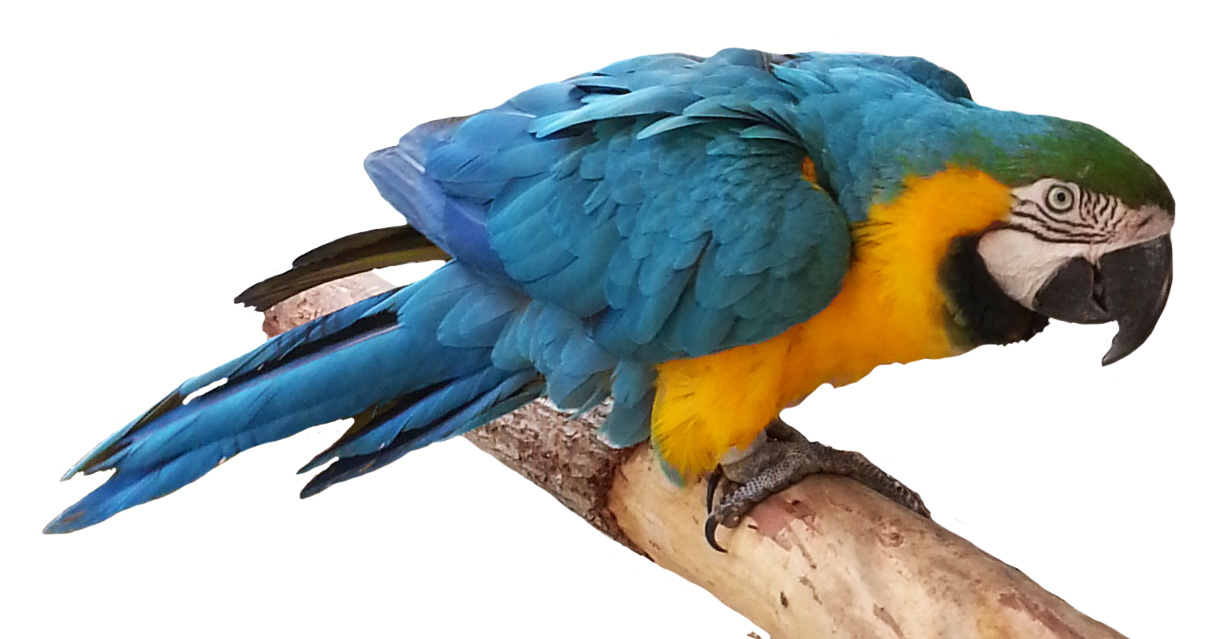
The same technology can do more things, and I'm proposing a birdie app looool, it takes in fashion photos and matches them to some spectacularly vivid photographs of birds.
Birds are prettily-coloured, and some pictures are just begging for this treatment anyway.
Really a lot of cool things can develop from letting AI match photos to similar photos.
Photos of things around you into photos of things far away, and imaginary non-realities and movies and experiences created out of that. Videos too. All forms.
One great thing about the birdie app is it's not about your face, your weight, your race, your skin, or anything like that - it's about fun, fashion, colours, poses, and... birds?
(Then I asked an expert and she said I have it wrong in that in fact people are vain and just want to see their own selves not some birds no matter how pretty or: "fashion is about narcissism" )
which is a shame I guess :-)
and which leads me to an even better product, one that matches one way, from fashion to bird, or the other way, from bird to fashion.
While the art-minded try it out for their fascinating bird-match -
hahaha, what bird do I look like if I wear this and pose like this -
the more clothes-minded might model clothes that match with a given pic, like a bird pic, iconic fashion pic, something like that
Actually, not just pics, there could be like gait, walking, acting, involved
...like,
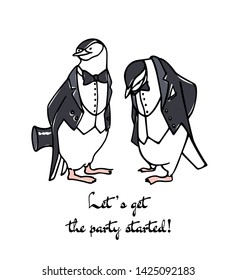
everybody does the penguin challenge one day and submits media in which they mimic the penguin,
or the kissing flamingos challenge with lots of pink,
"I've gotta kiss myself - I'm so pretty...I'm too hot!"
or the Madonna dress-alike World Championships that is like a whole show with many levels, maybe this is level five:
So it's not actually the birdie app anymore, it's the Dress Like (A Bird) Challenge. A.I. might be nice for matching to one of many bird photos, but it might not be so good for matching the other way. Worth testing, but it could be annoying if it seems not to understand things and then scores people badly for silly reasons. Ok.
I know that Nigerian women are ready to slay in any fashion-related contest. Let's not tell anybody yet though. I pity the fool who tries to compete :D :D :D
In fact, just Naija men alone will finish the competition. Hehehehe.
Microsoft's offering these new devices:
Surface book (the ultimate laptop), Surface Pro 4 (ultra-portable tablet), Microsoft band (fitness wearable), and Lumia 950XL (the phone that works like a PC, with Windows 10)
India is a country of
complete contrasts – five star hotels surrounded by slums, white-collar workers
rushing past unskilled labourers using primitive technologies, new globally
branded cars navigating congested roads along with antiquated models, freeways
and flyovers that suddenly lead to unpaved, snarled roads and so on.
India Country data:
·Three times the size of Nigeria, with triple the population
density
·Economy ranked 12th largest in the world
·From the 2011 census, 58.2% of the labour force is in agricultural
production (cultivators and labourers), 4 % in household industry
·The remaining 37.6% would include both manufacturing industry and
service provision
The
Indian IT/ITeS/BPO Sector
The spread of the
internet, with cheap and abundant telecommunications bandwidth, has enabled businesses
to parcel out white-collar work to specialist outside suppliers, with countries
such as India emerging as important hubs for producing services for consumption
at the other end of the fibre-optic cable (Edwards, 2004).This type of work is classified under service
provision and termed the Information
Technology, Information Technology-Enabled Services, and Business Process
Outsourcing (IT/ITeS/BPO) sector.
IT services include
·Systems integration and information systems consulting.
·Application development and support as well as IT training
services.
IT-enabled Services (ITeS) include
·Back-office data entry and processing.
·Customer contact services (such as complaints, tele-marketing,
collections support).
·Corporate support functions (such as HR, finance, procurement, IT
services).
·Knowledge services and decision-support (such as customer
analytics, claims and risk
·management and consultancy).
·Research and development services.
Outsourcing is the practice in which companies move or contract out some or
all of their manufacturing or service operations to other companies that
specialize in those operations or to companies in other countries.
An example would be
an American jeans manufacturer that closes a factory in the United States and
hires a contractor in India to produce its jeans, which are then imported and
sold with the American company’s logo.According to Forrester Research, nearly half a million computer hardware
and software jobs are expected to be outsourced from the United States to other
countries by the year 2015.
Corporate executives
say outsourcing helps their companies lower costs, increase profits, stay
competitive, and that they ultimately transfer cost savings to the consumer as
lower prices.
Currently, the BPO
sector appears poised on an unstable knife edge. It involves a young, highly educated
workforce conducting often routine work for which, in many cases, it is
patently over qualified. As a result, the explosive growth of BPO in India has
also given rise to startling attrition rates and working conditions that,
although perhaps (temporarily) acceptable in urban India may well
prove to be far short of employee aspirations.
A
brief history of Business Process Outsourcing in India
To most Indian
software companies, BPO came in handy in the face of the downturn in the IT industry.
Another stroke of luck for the industry was the cheap availability of abundant
and under-utilised fibre optic cables laid under the sea by western companies
during the e-commerce hype generated in the 1990s and their increasing
bandwidth capacity (Friedman, 2005).
While the Indian software
industry took more than 10 years to mature and climb up the value chain, the
Indian ITeS/BPO industry has taken just 5 years (between 2000 and 2005) to do
just that. Many of the top Indian software companies, namely; Infosys, Wipro
and Satyam, have now set up subsidiary companies such as Progeon,
Wipro BPO, and Nipuana, which are their
ITES arms.
Today, there are
around 3000 IT companies in India currently exporting to over 150 countries with
an employee base of around 700,000 and the top 5 Indian IT software
& service exporters are Tata
Consultancy Services, Infosys, Wipro, Satyam and HCL (Nasscom-c, 2005).
In line with this
growth, the ITeS/BPO/KPO industry now employs not only generic graduates, but
also MBAs, doctors, engineers and chartered accountants as process executives.
Even for Customer Service Representative jobs, which are relatively
low-skilled, the vast majority of employees are university graduates.
Apart from its sheer
size, India currently constitutes an intriguing part of the globalization story
for its pioneering of
what can be termed an Export Led Services Provision (ELSP) model. Today, anybody
who visits India will see that changes are everywhere and the country is well
and truly on the move.
Despite the
spectacular growth and visibility of the IT/ITES sector, it is still largely irrelevant
to the vast majority of Indians. Altogether, the combined IT/ITeS/BPO sector
employs under 1 million workers out of a total workforce (waged, salaried and
other) that is approaching half a billion
workers.Thus it is that despite the
tremendous success of IT and outsourcing in India, poverty persists with 35% of
all Indians living on less than one US dollar per day.
Labour
and Human Resource considerations
Although Indian IT/ITeS/BPO
workers are very inexpensive by Western standards, their salaries are high by
Indian standards.Currently, the sector
is devoid of trade unions, while existing unions appear to be unprepared to
enter the new economy.With respect to
changes in existing labour codes, a majority of the states have either promulgated
a government order or notification permitting all establishments in the
respective jurisdictions engaged in IT-enabled services (including call
centres) to: work on national holidays; allow women to work through night
shifts; and permit offices to function 24 hours a day, all through the year
(Nasscom-g, 2005), although such practices have traditionally been banned
through urban Shops and Establishment Acts.
The industry faces
skill shortages, but the question here is of quality, not quantity. While it is
estimated that approximately 17 million people will be available to the IT
industry by 2008 (Nasscom-j, 2005), the problem relates to their employability
and trainability.Jobs in IT minimally
require a tertiary degree in engineering, computer science or mathematics, while
call centre and data processing operations insist upon a Bachelors’ level
degree and high levels of proficiency in spoken and written English.Most Indians are not employable in the
sector, since literacy rates hover
around 65 per cent for the population as a whole and at 45% for females.
Attrition is the
biggest challenge currently facing the ITES/BPO sector. The ‘race for talent’
as one HR manager described it between BPO suppliers is fierce; the poaching of
workers has created much distrust among industry participants. Top five reasons
for turnover in the industry: dissatisfaction with salaries (47%), lack of
career opportunities (45%), leaving to pursue higher education (29%), illness
(28%) and physical strain (22%) (DQ-IDC, 2004).
Marriage and pursuing
higher education were frequently quoted as the main reasons for attrition. The
night shift work that most of the employees are engaged in causes them, particularly,
women, to leave this employment when they get married; hence, marriage is given
as the reason for attrition. To retain
those workers who would leave for higher education, some companies are
beginning to explore the possibility of providing scholarships, tuition reimbursement
and special arrangements with education institutions that would allow them to
offer courses in the workplace.
BPO companies may
feel squeezed for profits.Clients on
multi-year contracts with BPO providers expect costs to fall over the course of
the tender as the provider becomes more experienced and familiar with the
client’s products and markets.They also
face shortages in leadership and supervisory skills, particularly at the
team/project level.
Authors are undergraduate
students in Electrical Engineering at Bells University of Technology, Ogun
State.They prepared these notes under
my supervision for the course CEN 302: Introduction to ICT.






/cdn.vox-cdn.com/uploads/chorus_asset/file/3969046/food_spending__select_countries_2014.0.png)