Showing posts with label history. Show all posts
Showing posts with label history. Show all posts
Wednesday, April 16, 2025
Thursday, October 12, 2023
public participation in scientific research


Unlocking People Power Through Citizen Science
Find out how engaging non-academics in research can uncover and disperse new knowledge and ways of thinking that help shape solutions to seemingly intractable problems
Make sure you subscribe!
Follow on facebook.
Order Big Girl and Big Boy.
Find out how engaging non-academics in research can uncover and disperse new knowledge and ways of thinking that help shape solutions to seemingly intractable problems
Source: Times Higher Education
Also, in case you missed the Nobel Prize announcements 2023:
— REALbubbler (@realbubbler) October 12, 2023
Here is the Summary of #Nobel prizes announced for 2023 in #Physics, #Chemistry and #Medicines.
— Self_Explorer (@bhosale_nilesh4) October 5, 2023
All the discoveries are made in the smallest dimensions and took decades to reach their intermittent end.
Kudos to global efforts for creating a better world. pic.twitter.com/pINVzn6Ukp
Make sure you subscribe!
Follow on facebook.
Order Big Girl and Big Boy.
Wednesday, January 11, 2023
A Timbuktu Chronicle // West African History // The Songhai Empire - Africa's Age of Gold
Today, the Songhai Empire is all but forgotten by history. But this medieval kingdom was once the most powerful force in Africa. Find out how this civilization grew up on the fringes of the Sahara Desert, among some of the most extreme conditions that nature can throw at us. Discover how it grew and flourished, passing through a process known as the imperial cycle, and learn about what ultimately caused its sudden and dramatic collapse.
Make sure you subscribe!
Follow all my blogs on one twitter.
Follow on facebook.
Order Big Girl and Big Boy.
Make sure you subscribe!
Follow all my blogs on one twitter.
Follow on facebook.
Order Big Girl and Big Boy.
Monday, March 18, 2019
The importance of excess
Capitalism is a huge pain-in-the-ass, but:
(WATCH) The School Of Life: It’s only very recently in history that we’ve been able to buy more than the bare necessities. Can the history of consumption guide us to a wiser future?
Capitalism is a huge pain in the ass, and so are you.
Let's all have the most gorgeous + perfect week we've ever had.
Order Big Girl and Big Boy.
(WATCH) The School Of Life: It’s only very recently in history that we’ve been able to buy more than the bare necessities. Can the history of consumption guide us to a wiser future?
Capitalism is a huge pain in the ass, and so are you.
Let's all have the most gorgeous + perfect week we've ever had.
🌴
🌴
🌴
Get UpNaira email updates.Order Big Girl and Big Boy.
Friday, June 29, 2018
We Keep Learning
Enjoy these thought-provoking clips: on the sociology of marriage, ageing, and groups.
I have a 2 hour a day online-video habit now, but it may be a good thing.
Get email updates.
Order Big Girl and Big Boy.
Sunday, June 03, 2018
No buzzword left behind - A reflection on the primacy of bullshit in corporate life
" A century of management fads has created workplaces that are full of empty words and equally empty rituals. We have to live with the consequences of this history every day. Consider a meeting I recently attended. During the course of an hour, I recorded 64 different nuggets of corporate claptrap. They included familiar favourites such as “doing a deep dive”, “reaching out”, and “thought leadership”.
 There were also some new ones I hadn’t heard before: people with “protected characteristics” (anyone who wasn’t a white straight guy), “the aha effect” (realising something), “getting our friends in the tent” (getting support from others).
After the meeting, I found myself wondering why otherwise smart people so easily slipped into this kind of business bullshit. How had this obfuscatory way of speaking become so successful?
... people working in bullshit jobs need to do something. And that something is usually the production, distribution and consumption of bullshit. "
LOL. You have to read this. Really.
Get email updates.
Order Big Girl and Big Boy.
Click every link 😄
After the meeting, I found myself wondering why otherwise smart people so easily slipped into this kind of business bullshit. How had this obfuscatory way of speaking become so successful?
... people working in bullshit jobs need to do something. And that something is usually the production, distribution and consumption of bullshit. "
LOL. You have to read this. Really.
Get email updates.
Order Big Girl and Big Boy.
Click every link 😄
Friday, April 20, 2018
Everybody's talking about all the bigly things b.s. can do and everybody wanna be an influenza and dunno why my people so confident how they can sell hot air
Fake it till you make it: meet the wolves of Instagram |Symeon Brown https://t.co/9LuWfChOFT— The Guardian (@guardian) April 19, 2018
How to get rich quick in Silicon Valley | Corey Pein https://t.co/HSKDMsz00m— The Guardian (@guardian) April 17, 2018
It's just another sad Gold Rush.
Get UpNaira email updates.
Order Big Girl and Big Boy.
Sunday, April 08, 2018
Vox explains Belt and Road
China's trillion dollar plan to dominate global trade: China's Belt and Road Initiative is the most ambitious infrastructure project in modern history. It spans over 60 countries and will cost over a trillion dollars. The plan is to make it easier for the world to trade with China, by funding roads, railways, pipelines, and other infrastructure projects in Asia and Africa. China is loaning trillions of dollars to any country that's willing to participate and it's been a big hit with the less democratic countries in the region. This makes the BRI a risky plan as well. But China is pushing forward because its goals are not strictly economic, they're also geopolitical. Vox.com is a news website that helps you cut through the noise and understand what's really driving the events in the headlines.
Get UpNaira email updates.
Order Big Girl and Big Boy.
Tuesday, July 11, 2017
Economics is (of course very) useful and (of course very) flawed. Enjoy this essay and possibly the book.
Test your powers of concentration with this good long read. How economics became a religion https://t.co/t1rfeT3sHr— Guardian Weekly (@guardianweekly) July 11, 2017
The long read - How economics became a religion by @jarapley https://t.co/LIdeNbVsuQ pic.twitter.com/EuZGXUIBnI— Guardian Comms (@GuardianComms) July 11, 2017
Get email updates.
Order Big Girl and Big Boy.
Monday, January 30, 2017
Story, Story
Sign up for the newsletter.
Order Lovebirds now, to get it before Valentine's Day.
Wednesday, November 23, 2016
Affordable Housing - How To Succeed
1. Stop complaining about the price of cement. Start Digging.
Wise civilizations have always built homes with what they have, not with what they have to obtain with difficulty. Today's Nigeria is not a wise civilization I suppose, or we would use laterite bricks more.
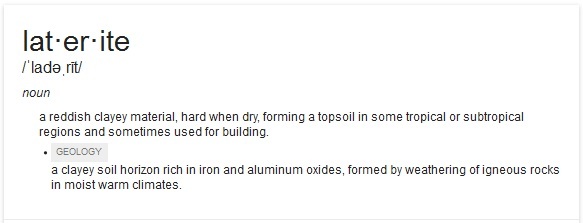
What is laterite? The answer may be beneath your feet at the construction site.
2. Build more units than you need
Sell or rent to others, and make some money. Be an answer to the housing crunch...Nigerians need answers. Do you want to become an expert in affordable and sustainable building technology? Start here.
http://olojauk.com/article/with-n3m-15000-you-can-build-your-own-house-in-nigeria.html
http://thenationonlineng.net/building-a-functional-low-cost-house/
http://www.nairaland.com/1495068/build-red-bricks-hugely
http://www.nairaland.com/2209886/alternative-building-technique-affordable-housing
http://www.nairaland.com/1006963/affordable-low-cost-housing-option
http://www.vanguardngr.com/2012/04/affordable-housing-with-bricks-you-can-reduce-cost-by-40/
https://ng.boell.org/2015/03/03/affordable-green-housing-nigeria
3. Lower your running costs too
Fire NEPA/PHCN/xxDC , throw away the noisy generator (or give it to your enemy lol) and be your own solar power provider. Also remember to build in time-tested natural ventilation and passive cooling systems from day 1, from the first drawing your architect makes.

Get inspired: See more natural heating and cooling systems via snelhai's pinterest page
 We can learn a lot about Passive Cooling from Cairo/Egypt, Yemen/Arabia, Iran/Iraq, and the Middle East in general. Example: E.M. Okba (Cairo University) has notes on Building Design for Passive Cooling
Apply wisdom. Come back with a testimony.
You may also like:
http://upnaira.blogspot.com.ng/2015/12/still-trying-to-find-your-passion-what.html ,
Using electric power at home ,
http://lifelib.blogspot.com.ng/2011/01/agric-chic.html
Get UpNaira by email.
Order Big Girl and Big Boy.
Wise civilizations have always built homes with what they have, not with what they have to obtain with difficulty. Today's Nigeria is not a wise civilization I suppose, or we would use laterite bricks more.
What is laterite? The answer may be beneath your feet at the construction site.
2. Build more units than you need
Sell or rent to others, and make some money. Be an answer to the housing crunch...Nigerians need answers. Do you want to become an expert in affordable and sustainable building technology? Start here.
http://olojauk.com/article/with-n3m-15000-you-can-build-your-own-house-in-nigeria.html
http://thenationonlineng.net/building-a-functional-low-cost-house/
http://www.nairaland.com/1495068/build-red-bricks-hugely
http://www.nairaland.com/2209886/alternative-building-technique-affordable-housing
http://www.nairaland.com/1006963/affordable-low-cost-housing-option
http://www.vanguardngr.com/2012/04/affordable-housing-with-bricks-you-can-reduce-cost-by-40/
https://ng.boell.org/2015/03/03/affordable-green-housing-nigeria
 |
| Meet the experts, read their books and study their works, for example The Architecture of Renowned Master Demas Nwoko |
3. Lower your running costs too
Fire NEPA/PHCN/xxDC , throw away the noisy generator (or give it to your enemy lol) and be your own solar power provider. Also remember to build in time-tested natural ventilation and passive cooling systems from day 1, from the first drawing your architect makes.
 |
| Thermal ventilation and Cross-ventilation |
Get inspired: See more natural heating and cooling systems via snelhai's pinterest page
 |
| Ventilation Blocks |
 |
| Middle Eastern - style wind tower for ventilation |
 |
| Traditional Badgir (wind-catcher) system |
You may also like:
http://upnaira.blogspot.com.ng/2015/12/still-trying-to-find-your-passion-what.html ,
Using electric power at home ,
http://lifelib.blogspot.com.ng/2011/01/agric-chic.html
Get UpNaira by email.
Order Big Girl and Big Boy.
Saturday, October 15, 2016
Visualizing Data: Wealth, Health, and Global History
From The Economist, an animated infographic showing the world's top three economies from 1AD to date.
The Joy Of Stats, narrated by Hans Rosling, shown on the BBC: How life expectancy has exploded worldwide over the last 200 years.
Get email updates.
Order Big Girl and Big Boy.
The Joy Of Stats, narrated by Hans Rosling, shown on the BBC: How life expectancy has exploded worldwide over the last 200 years.
Get email updates.
Order Big Girl and Big Boy.
Wednesday, August 05, 2015
The 10 Richest People of all time
According to Time, and after factoring in the time value of money, Microsoft's Bill Gates barely makes the list.
We have Augustus Caesar and Genghis Khan, Indian and Chinese emperors, Carnegie and Rockefeller, and sitting at the top is an African king named Mansa Musa. No girls. See for yourself.
Get email updates from UpNaira
We have Augustus Caesar and Genghis Khan, Indian and Chinese emperors, Carnegie and Rockefeller, and sitting at the top is an African king named Mansa Musa. No girls. See for yourself.
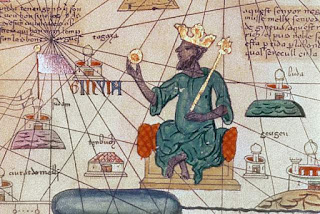 |
| Mansa Musa I of Mali |
Get email updates from UpNaira
Tuesday, February 18, 2014
Financial Markets, an excellent, excellent introduction
Trust me, you will want to spend a few hours a week taking this online course that is currently available at the unbeatable price of ... an internet connection. Financial Markets begins NOW, this week, and runs for eight weeks. It may get addictive, like my previous Coursera courses.
Prof. Schiller (Nobel Prize in Economics in 2013) who will be teaching the course, says in the introduction "finance is a very important technology.
It has a mathematical basis.
It has a intellectual underpinning that
makes
it a infrastructure for our, our whole
economy.
And I want this course to help people
understand this technology so that they are
not buffeted by it, so they can react to
the technology and its
opportunities constructively in whatever
walk of life they choose."
There will be a guest every week, and in week one it's Hank Greenberg (of pre-bailout AIG).
Get started with Financial Markets.
+Schiller,+Nobel+laureate,+Professor+at+Yale+University.jpg) |
| Coursera + Yale university. Financial Markets. |
There will be a guest every week, and in week one it's Hank Greenberg (of pre-bailout AIG).
Get started with Financial Markets.
Monday, September 02, 2013
Social classes; definitions
Social class is not identical to wealth, but the two concepts are related (particularly in Marxist theory), leading to the combined concept of Socioeconomic status.
Partly as a result of different economic conditions of life, members of different social classes often have different value systems and view the world in different ways. As such, there exist different "conceptions of social reality, different aspirations and hopes and fears, different conceptions of the desirable."
The way the various social classes in society view wealth vary and these diverse characteristics are a fundamental dividing line among the classes. Source: Wikipedia/Wealth
 Those with the least amount of wealth are the poor. Wealth accumulation for this class is to some extent prohibited...Most of the institutions that the poor encounter discourage any accumulation of assets.
The upper class

Upper class values include higher education, and the wealthiest people value the accumulation and maintenance of wealth, the maintenance of social networks and the power that accompanies such networks. Children of the upper class are typically schooled on how to manage this power and channel this privilege in different forms. It is in large part by accessing various edifices of information, associates, procedures and auspices that the upper class are able to maintain their wealth and pass it to future generations.
The middle class
 The middle class places a greater emphasis on income.
The middle class views wealth as something for emergencies and it is seen as more of a cushion. This class comprises people that were raised with families that typically owned their own home, planned ahead and stressed the importance of education and achievement.
They earn a significant amount of income and also have significant amounts of consumption.
However there is very limited savings (deferred consumption) or investments, besides retirement pensions and homeownership. They have been socialized to accumulate wealth through structured, institutionalized arrangements. Without this set structure, asset accumulation would likely not occur.
Source: Wikipedia/Wealth
Partly as a result of different economic conditions of life, members of different social classes often have different value systems and view the world in different ways. As such, there exist different "conceptions of social reality, different aspirations and hopes and fears, different conceptions of the desirable."
The way the various social classes in society view wealth vary and these diverse characteristics are a fundamental dividing line among the classes. Source: Wikipedia/Wealth
The lower class
The upper class
Upper class values include higher education, and the wealthiest people value the accumulation and maintenance of wealth, the maintenance of social networks and the power that accompanies such networks. Children of the upper class are typically schooled on how to manage this power and channel this privilege in different forms. It is in large part by accessing various edifices of information, associates, procedures and auspices that the upper class are able to maintain their wealth and pass it to future generations.
The middle class
The middle class views wealth as something for emergencies and it is seen as more of a cushion. This class comprises people that were raised with families that typically owned their own home, planned ahead and stressed the importance of education and achievement.
They earn a significant amount of income and also have significant amounts of consumption.
However there is very limited savings (deferred consumption) or investments, besides retirement pensions and homeownership. They have been socialized to accumulate wealth through structured, institutionalized arrangements. Without this set structure, asset accumulation would likely not occur.
Source: Wikipedia/Wealth
Saturday, January 14, 2012
Hug a capitalist today
From The Economist
...Scorn for moneymen has a long pedigree. Jesus expelled the moneychangers from the Temple. Timothy tells us that “the love of money is the root of all evil.” Muhammad banned usury. The Jews referred to interest as neshek—a bite. The Catholic church banned it in 1311. Dante consigned moneylenders to the seventh circle of hell—the one also populated by the inhabitants of Sodom and “other practisers of unnatural vice”.
...This prejudice has proven dangerous. Without money to grease them, the wheels of commerce turn slowly or not at all. Civilisations that have eased the ban on moneylending have grown rich. Those that have retained it have stagnated.
...Prejudice against financiers can cause non-economic damage, too. Throughout history, moneylenders have been persecuted. Ethnic minorities—most obviously the Jews in Europe and America but also the Chinese in Asia—have clustered in the financial sector first because they were barred from more “respectable” pursuits and later because success begets success. At times, anti-banking prejudice has acquired a strong tinge of ethnic hatred.
...In medieval Europe Jews were persecuted not only because they were not Christians but also because killing them was a quick way to expunge debts...The crisis of 2008 showed that global finance requires tough medicine...but demonising bankers will not solve these problems—and may well, if unchecked, bring a lot of ancient ugliness back to life. (...Read more)

How many people are anti-Igbo (among Nigerians), hate Ijebus (among Yorubas), feel mad at Nigerians (in Africa), abhor Jews, or maybe believe that Wall Street "casinos" are evil? Read The dangers of demonology to appreciate the long history of banker-hate and its dangers.
...Scorn for moneymen has a long pedigree. Jesus expelled the moneychangers from the Temple. Timothy tells us that “the love of money is the root of all evil.” Muhammad banned usury. The Jews referred to interest as neshek—a bite. The Catholic church banned it in 1311. Dante consigned moneylenders to the seventh circle of hell—the one also populated by the inhabitants of Sodom and “other practisers of unnatural vice”.
...This prejudice has proven dangerous. Without money to grease them, the wheels of commerce turn slowly or not at all. Civilisations that have eased the ban on moneylending have grown rich. Those that have retained it have stagnated.
...Prejudice against financiers can cause non-economic damage, too. Throughout history, moneylenders have been persecuted. Ethnic minorities—most obviously the Jews in Europe and America but also the Chinese in Asia—have clustered in the financial sector first because they were barred from more “respectable” pursuits and later because success begets success. At times, anti-banking prejudice has acquired a strong tinge of ethnic hatred.
...In medieval Europe Jews were persecuted not only because they were not Christians but also because killing them was a quick way to expunge debts...The crisis of 2008 showed that global finance requires tough medicine...but demonising bankers will not solve these problems—and may well, if unchecked, bring a lot of ancient ugliness back to life. (...Read more)
How many people are anti-Igbo (among Nigerians), hate Ijebus (among Yorubas), feel mad at Nigerians (in Africa), abhor Jews, or maybe believe that Wall Street "casinos" are evil? Read The dangers of demonology to appreciate the long history of banker-hate and its dangers.
Subscribe to:
Posts (Atom)

