Showing posts with label big-picture. Show all posts

Thursday, October 22, 2015

Because traffic is killing, because 5-days a week is so 20th century, because why is there a crater in the middle of the highway, because we may really need to make the meetings snappy, because weren't all these gadgets supposed to raise human productivity, because whatever happened to just chilling, because let's spread the work around so we won't have so many unemployed...


It's Thursday. We're almost there.
Then rinse, repeat.

Whose idea was the 40-hour workweek, anyway?  Hint, it's why we celebrate Worker's Day, aka my birthday :)

And how long before 40-hours-a-week goes the way of the pocket calculator? Hint: as soon as people decide they can tolerate the change.  Who would you be without a job, without the predictability of a daily commuteEverybody's doing it, so it must be right, right?  
https://www.google.com/search?q=when+it+doesn%27t+feel+right+go+left&source=lnms&tbm=isch&sa=X&ved=0CAcQ_AUoAWoVChMI96yDntLVyAIVxLgUCh04KwqI&biw=1338&bih=467
 Even CNBC, which must surely hold the usual mainstream business media bias, snuck in a story, courtesy of Larry Page's comments
soooo 
Next time you get a query about skipping work to get that extra sleep, play with the kids, enjoy the neighbourhood, or just get a slow haircut and manicure, just point to this page or this one and tell'em: I'm in the Future.

Just kidding.
Sort of.
We're almost there.  
Get email updates so you don't miss out

Tuesday, January 20, 2015

Modern Leadership

10 Reasons Why Sheikh Mohammed Bin Rashed Is What A Modern Leader Should Be, written by Maya Ammar for scoopempire.

Every now and then comes a man that changes the face of a certain industry, think Steve Jobs in technology and Mohamed Ali in fighting. However, not every so often comes a man who changes the face of true leadership.
Sheikh Mohammed Bin Rashid Al Maktoum, Vice President and Prime Minister of the UAE and ruler of its star emirate, Dubai, is the man to look up to. Here is why we think every modern leader should follow Sheikh Mohammed’s footsteps: 

1. He shaped Dubai

dubai_660
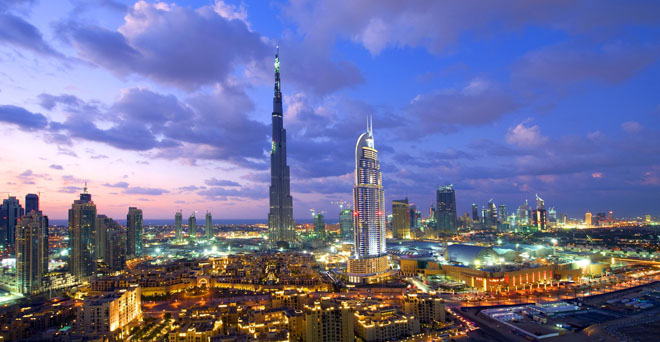
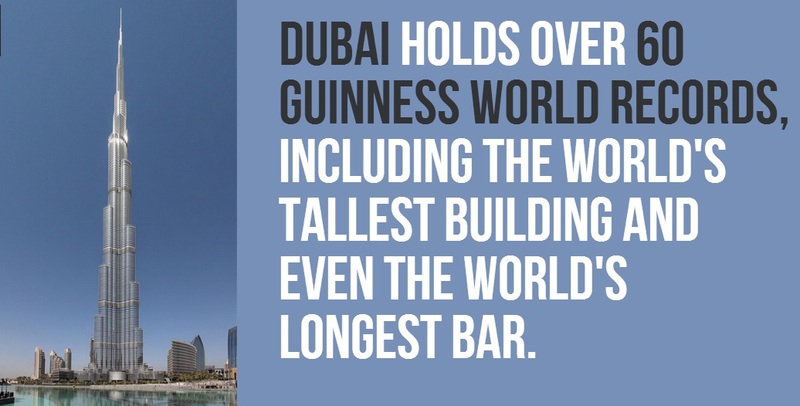
What Dubai is now is the result of the relentless effort of hundreds of thousands people, but let’s face it, Sheikh Mohammed is who set the whole thing in motion. From Dubai Media City and Dubai International Finance Center to the Palm Islands and Burj Khalifa, he oversaw countless projects that has put Dubai on the map of leading cities in the world. Nobody can deny that Dubai would be nowhere where it is right now if it weren’t for this man. 

2. He believes in the power of the young

&MaxW=640&imageVersion=default&AR-141209873
It’s a concept we much lack and need in other Middle Eastern countries. If you consider his team and Dubai’s governmental employees, you will find that they are mostly made up of young men and women. Sheikh Mohammed believes in the fresh ideas and impalpable energy that you can only find in the youth. 

3. He’s always aiming to be number one

content_Dubai
“I want Dubai to be number one, not in the region, but in the world. Number one in everything: high education, health, housing. [I want to] Give my people the highest way of living.”
To Sheikh Mohammed, there is only one way Dubai can go, and that is the way to being the number one city in the world.

4. He shows appreciation

dubai prince
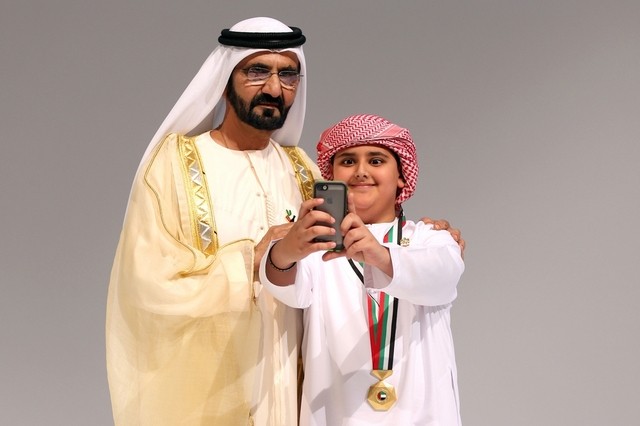
In every occasion and in every speech he makes, he never fails to show true and deep appreciation to each and every one of his team and employees. He always reminds them how big of a contribution they are making to Dubai’s development on every level. 

5. He has zero tolerance for corruption

judge-gavel
From the famous 2001 arrest incidence of the head of Dubai Customs back then, Obaid Saqr bin-Busit, to many other arrests of high profile officials, Sheikh Mohammed has always shown that when it comes to corruption, no one is above the law.

6. He knows how to use social media

crown prince
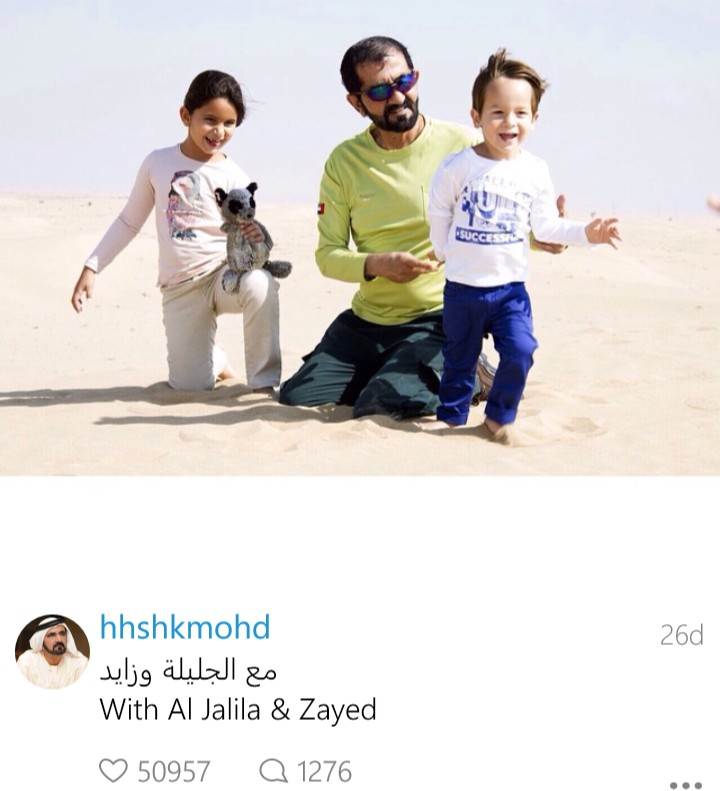
He is one of the most active world leaders on social media. And instead of hiring someone to manage his social media for him, Sheikh Mohammed takes to personally posting on Twitter, Instagram and Facebook.

7. He has time for his hobbies

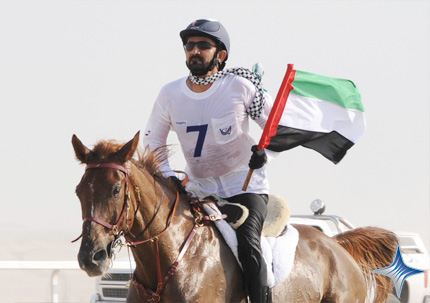
sheikh-mohammed-wins-bahrain-endurance-race1
You would think that with his relentless efforts to make Dubai rise even higher that he has no time for practicing anything in his free time. However, the ruler of Dubai is an avid equestrian, winning the FEI World Endurance Championship in 2012, and a recognized poet in Arabic.

8. He’s a visionary

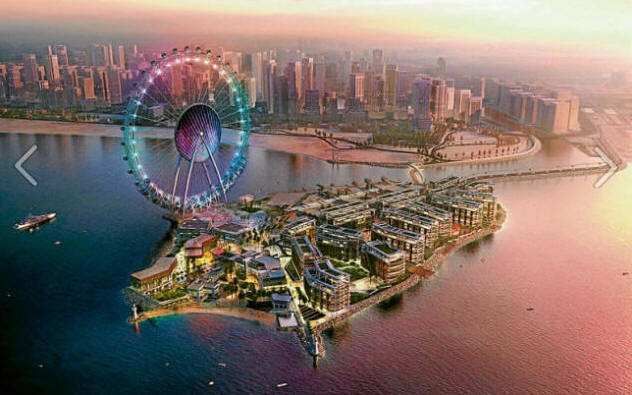
Bluewaters-Island-Dubai
Looking ahead is not easy when you’re leading an entire nation, but Sheikh Mohammed makes it seems like an easy task. He’s already selling the future, making plans for not just the next year, but the next decade to ensure the brightest future for the UAE.

9.  He gives back

hh-sheikh-mohammed-bin-rasid-al-maktoum-world-consulting-uae
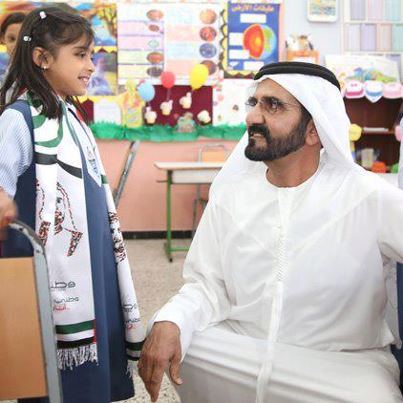
From launching campaigns to provide the less privileged with a chance of education to providing treatment and health services for the visually impaired, Sheikh Mohammed has launched and funded many charities and organizations.
He also uses his accounts to raise awareness for great causes, most recent of which is the UAE Compassion campaign for winter relief of Syrian refugees.

10. He places high value on the environment

The UAE’s record breaking and rising to fame didn’t stop Sheikh Mohamed from focusing on the environment. Burj Khalifa’s ‘green’ initiative, the landscaping is irrigated using a unique condensate collection system. Water from the tower’s cooling equipment is recovered, providing an estimated 15 million gallons of water a year, enough to fill 20 Olympic-sized swimming pools and this water is used to irrigate the 11-hectare green oasis that surrounds the foot of the tower.

 The Author,
avatar
She is passionate about life, with a severe case of wanderlust. She’s an avid sitcom watcher. Her life’s theme song is Barbra Streisand’s “Don’t Rain On My Parade”.
 

 I loved this feature so much, I copied and pasted the whole thing.  
I would add this to what 'MODERN' Leadership means to me: Feminine, in touch with its feminine side, inclusive of female representation.  That's all.  :)
Get email updates

Monday, December 22, 2014

Top 100 companies in Nigeria

 What I really want and haven't got:
1. The list.
2. The criteria, e.g. accompanying each company name is some financial measure - taxes, assets, capital, revenue, or a defined combination.
But guess what?  I can't even find the list, just several news stories each stating a few companies from the list and that this is an initiative of The Presidency, the Ministry of Trade and Investment, and implemented by an independent committee.
This is third-world journalism, no?
Fortunately, one news(paper) The Nation, has the above pictures from the Dec 2014 Presidential dinner with the CEOs of the top 100 companies.
Get email updates on money, career, business, and development.

Tuesday, July 22, 2014

The World Can Afford to Shrink The Workweek

Interestingly, workers are not ready for the freedom that a shrinking workweek may entail.  For many the fear is "if I'm not commuting to and from work daily or earning a better job title, then who am I?"- an existential crisis.  The same type of fear that makes even wealthy people hate losing their job - rather than embrace the opportunities for a newer freer life, they're just upset because they want, more than anything zen you can think up, to keep in the game, so to speak. The job gives them meaning and order.

It is also true that many, particularly the poorest, need the jobs because they absolutely need the income.  Employment creates a pathway, particularly for the poorest people, to scramble out of poverty into the realm of possibility.

Employment creates a pathway for the poorest NATIONS also, and this is why it must remain a pillar of economic policy in Nigeria and several other developing nations - massive employment gives the population something to do that is not destructive, it may sometimes give the people a skills ramp too so they can move to higher-value production, and - very importantly - it earns income in a granular way that goes direct to the people and fosters democracy rather than through a central source that then fosters inequality and crime and war in the extreme scenario.  

Anyway, here are two comments on the need to shrink the workweek instead of moaning endlessly about unemployment:

Vivek Wadhwa, in We're Heading into a jobless future, no matter what the government does (The Washington Post):
"...Summers is right. Within two decades, we will have almost unlimited energy, food, and clean water; advances in medicine will allow us to live longer and healthier lives; robots will drive our cars, manufacture our goods, and do our chores. There won’t be much work for human beings. Self-driving cars will be commercially available by the end of this decade and will eventually displace human drivers—just as automobiles displaced the horse and buggy...
Summers is wrong, however, in his belief that governments can do as they did in the industrial age: create “enough work for all who need work for income, purchasing power and dignity.” They can barely keep up with the advances that are happening in technology, let alone develop economic policies for employment.  
The only solution that I see is a shrinking work week. We may perhaps be working for 10 to 20 hours a week instead of the 40 for which we do today. And with the prices of necessities and of what we today consider luxury goods dropping exponentially, we may not need the entire population to be working. There is surely a possibility for social unrest because of this; but we could also create the utopian future we have long dreamed of, with a large part of humanity focused on creativity and enlightenment."

Larry Page, in this famous, and very highly recommended, chat that also features Google co-founder Sergey Brin and venture-capitalist Vinod Khosla.  
"VinodKhosla The vast majority of employment shifted from farming to only needing about 2-percent of the U.S. workforce. That happened between 1900 and the year 2000. I see the beginnings of that happening again with the rapid acceleration the next 10, 15, 20 years.
LarryPage I totally believe we should be living in a time of abundance, like Peter Diamandis' book. If you really think about the things that you need to make yourself happy - housing, security, opportunities for your kids - anthropologists have been identifying these things. It's not that hard for us to provide those things. The amount of resources we need to do that, the amount of work that actually needs to go into that is pretty small. I'm guessing less than 1-percent at the moment. So the idea that everyone needs to work frantically to meet people's needs is just not true. I do think there's a problem that we don't recognize that. I think there's also a social problem that a lot of people aren't happy if they don't have anything to do. So we need to give people things to do. We need to feel like you're needed, wanted and have something productive to do. But I think the mix with that and the industries we actually need and so on are-- there's not a good correspondence. That's why we're busy destroying the environment and other things, maybe we don't need to be doing. So I'm pretty worried. Until we figure that out, we're not going to have a good outcome. One thing, I was talking to Richard Branson about this. They don't have enough jobs in the UK. He's been trying to get people to hire two part-time people instead of one full-time. So at least, the young people can have a half-time job rather than no job. And it's a slightly greater cost for employers. I was thinking, the extension of that is you have global unemployment or widespread unemployment. You just reduce work time. Everyone I've asked-- I've asked a lot of people about this. Maybe not you guys. But most people, if I ask them, 'Would you like an extra week of vacation?' They raise their hands, 100-percent of the people. 'Two weeks vacation, or a four-day work week?' Everyone will raise their hand. Most people like working, but they'd also like to have more time with their family or to pursue their own interests. So that would be one way to deal with the problem, is if you had a coordinated way to just reduce the workweek. And then, if you add slightly less employment, you can adjust and people will still have jobs.
SergeyBrin I will quibble a little bit. I don't think that in the near term, the need for labor is going away. It gets shifted from one place to another, but people always want more stuff or more entertainment or more creativity or more something."
Watch and/or read the complete fireside chat and transcript here.

You may say I'm a dreamer, but I'm not the only one...

Previously on UpNaira


Followers